Are There Sharks In Egypt: Info & Safety Tips

Are there sharks in Egypt? Yes, sharks live in the Red Sea, and you may occasionally spot one while swimming, snorkeling, or diving. However, shark encounters are uncommon, and most visitors enjoy Egypt’s beaches without any problems.
We have been on beach holidays in Hurghada several times, and we also visited Marsa Matrouh on the Mediterranean coast. We never saw a shark and never felt unsafe.
Below, I’ll explain which sharks live in the Red Sea, what is known about shark attacks in Egypt, and how to stay safe in the water.
Are There Sharks In Egypt? Exploring The Myth And Reality.
Yes, there are sharks in Egypt, together with many other sea animals. Whether you are planning a diving trip or you are just curious about what lives in the water, here is what you should know about the sharks of the Red Sea.
Egypt’s Coastal Charm and Diverse Marine Life
Hurghada, Sharm El Sheikh, Marsa Alam, and Dahab are known for their clear water, sandy beaches, and great diving and snorkeling.
The warm, clear water of the Red Sea is home to colorful coral reefs and many types of fish, some of them endemic. This makes the Red Sea one of the best places in the world for diving and snorkeling.
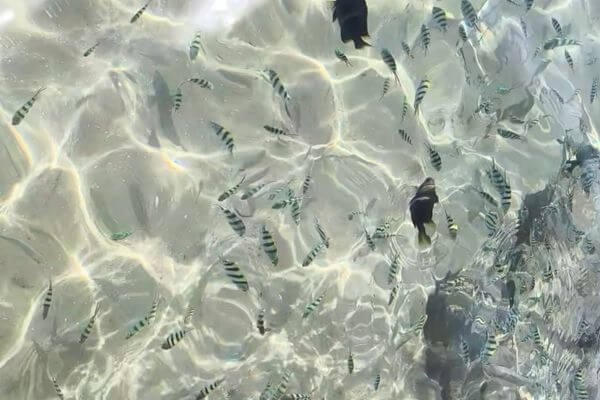
Around 49 shark species have been reliably reported in the wider Red Sea and Gulf of Aden region. However, most are rarely seen, even by scuba divers.
You can also meet dolphins, rays, Napoleon wrasse, giant moray, lionfish, stonefish, clownfish, turtles, and many more. Passionate divers can also find some nice shipwrecks under the water.
Realistic Threats and Safety Tips
Thousands of people swim, snorkel, and dive in the sea every day, and shark bites are very rare.
According to the International Shark Attack File, there were 65 confirmed unprovoked shark bites worldwide in 2025, nine of which were fatal. The 10-year average is around 72 bites and six fatalities per year.
In Egypt, there have been a few serious incidents over the years. They happened in different places and in different situations, so it is not true that every beach or resort has the same level of risk.
Attacks are uncommon, but it is still important to be careful in the water.
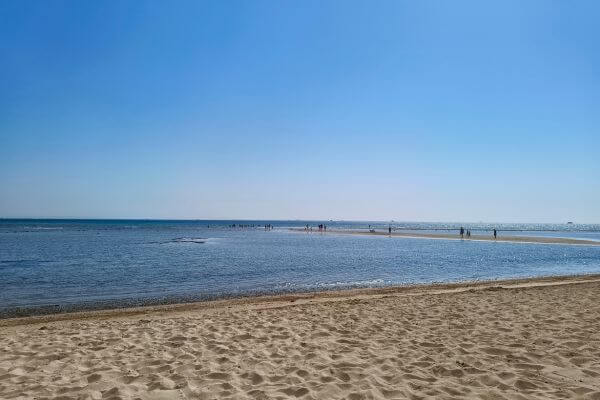
The latest incident happened in December 2024 in Marsa Alam. One tourist was killed and another was injured.
According to the Ministry of Environment, it happened in deep water outside the designated swimming area, near the jetties, where swimming is not allowed.
A scientific committee later said that the shark was a mako. Both shortfin and longfin makos live in the Red Sea, but they are rarely seen near beaches.
In September 2023, an Egyptian woman was bitten by a shark while swimming at Laguna Beach in Dahab. She lost her arm but survived, and the beach was closed. The species was not identified.
In June 2023, a tiger shark killed a young man in Hurghada. The authorities closed the coast between El Gouna and Soma Bay for two days, and the shark was caught.
In July 2022, two women died in separate attacks within a few hours of each other and about 600 meters apart, near Sahl Hasheesh south of Hurghada. The species was not officially confirmed.
Earlier incidents were in October 2020, when a boy lost his arm and a tour guide lost his leg while snorkeling in Ras Mohammed National Park near Sharm El Sheikh, and in August 2018, when a Czech tourist was killed in Marsa Alam.
In 2015, a German tourist was killed while swimming during a cruise near Qusair.
In December 2010, five people were attacked within a few days in Sharm El Sheikh, and one German woman died. Officials said that an oceanic whitetip shark and a mako shark were involved.
So why do sharks sometimes come closer to the shore, and why do they sometimes bite people? Sharks do not hunt people on purpose.
Humans are not natural prey, and most bites happen when a shark mistakes a person for a fish or comes to investigate something moving in the water.
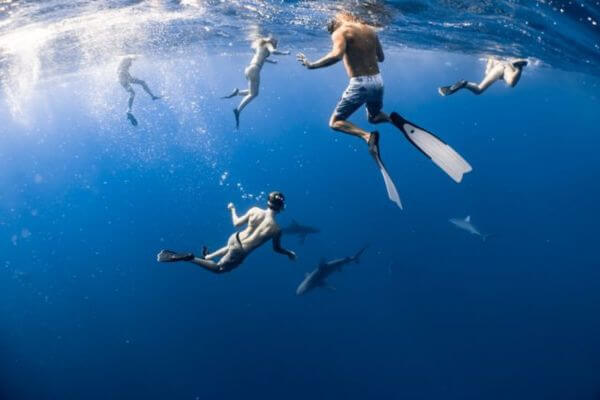
Photo Credit: Daniel Torobekov, Pexels
Experts think that a few things may play a role, but none of them is proven as the cause of a specific attack:
- Overfishing can affect the marine ecosystem and the availability of food for sharks. The scientific committee investigating the Marsa Alam incident recommended further research into its effects on shark behaviour.
- Food waste and dead animals thrown from boats or resorts can attract sharks. In 2010, one theory was that dead sheep from a livestock ship were dumped near Sharm El Sheikh.
- Fishing activity close to swimming areas can also bring sharks closer.
- Some reports also mention the breeding season in summer, and changes in the marine ecosystem or the warmer water as possible factors.
- The June 2023 case in Hurghada is a good example of how careful we should be here. The shark was a tiger shark, a female, and the autopsy showed that she was pregnant. Reports suggested she might have come to shallow water looking for a safe place to give birth, and pregnant sharks can be more defensive. This is only a possible explanation, not a confirmed cause of the attack. Tiger sharks give birth to live young, they do not lay eggs.
Now, what can we do to stay safe?
- Swimming close to shore, inside the marked swimming area, is safer than swimming far out, but it is not a guarantee.
- Follow the beach warnings and the lifeguards’ instructions, and do not swim alone.
- Avoid swimming at dawn and dusk, when many sharks are most active.
- Stay away from fishing areas and from places where fish waste or food is thrown into the water.
- Do not wear shiny jewelry, do not swim with an open wound, and avoid a lot of splashing, because sharks can hear the low sounds of splashing and may come to check what it is.
- If sharks are known to be in the area, do not go in.
- If you see a shark, stay calm and keep it in sight. Do not make sudden movements, do not splash, and do not try to chase it. Stay upright, slowly move away, and leave the water if you can. Calm movements are better than panic, but staying calm does not guarantee that you will be safe.
- You may have heard that sharks can feel your heartbeat and your fear. This is partly true. Sharks have special pores on the snout, called ampullae of Lorenzini, that detect very weak electrical signals from the muscles and nerves of living animals. This helps them find prey, even a fish hiding in the sand, but only from a fairly short distance. A beating heart also produces electrical signals, so sharks may be able to detect it at very close range. However, there is no proof that sharks sense human fear. What we do know is that splashing and fast, jerky movements can look like a fish in trouble.
- It is also not a good idea to try to swim away fast. Most sharks cruise at a slow speed, but they can speed up a lot for a short time, much faster than any person can swim. The shortfin mako is widely seen as the fastest shark, with reported burst speeds of around 70 km/h. That is a reported maximum for this one species, not the normal speed of sharks, and the numbers differ between sources.
- If a shark actually attacks you, the only way is to fight back. The eyes and the gills are sensitive areas, and they may be your targets. Please remember that this advice is only for a real attack, not for the moment when you see a shark.
What about shark nets? After the June 2023 incident, local media reported that the governor of the Red Sea supported installing protective nets near beaches.
I could not find an official confirmation that a nationwide plan was approved or built, so it’s best to ask your hotel what protection it has in the water.
Diving in Egypt: Safety and Precautions
Diving is different from swimming at the beach, so the precautions are different too. Every diving center gives a safety briefing before the dive.
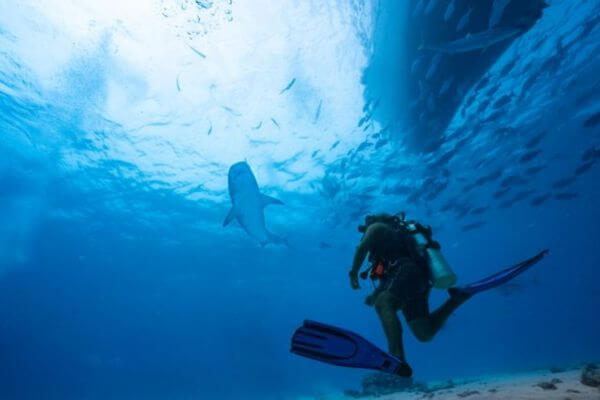
Photo Credit: Pexels
The instructors explain how to behave around sharks, what to do and not to do, and what to do if a shark becomes suddenly aggressive.
Listen carefully, follow your guide, stay with the group, and keep a safe distance from the shark. Keep it in sight when a shark is near, and never chase, touch, or feed sharks.
Here are some dos and don’ts when interacting with sharks:
| DO’S | DON’TS |
| Listen to the dive briefing and follow your guide | Don’t skip the briefing or ignore your guide’s instructions |
| Stay calm and move slowly | Don’t panic or make sudden, jerky movements |
| Stay in a group | Don’t wander away from your group or guide |
| Keep a safe distance from the shark | Don’t chase, touch, feed, or block the path of a shark |
| Keep it in sight and stay in a vertical position | Don’t turn your back on the shark |
| If you have to go to the surface, do it close to the boat or reef and together as a group | Don’t surface far away from the boat or the reef |
Common Shark Species in Egypt
I will introduce you to the main sharks found in Egypt and how dangerous they are.
One thing is important to know: most of these sharks live at offshore reefs and deeper water, so ordinary beach visitors will probably never see them. You are much more likely to meet them on a dive or a snorkeling trip to a reef.
1. Grey Reef Sharks This is one of the sharks that divers see most often in the Red Sea. They patrol reefs in not very deep water.
They are about 2 meters long and have a white-tipped dorsal fin, a black-edged tail, and dark-tipped fins.
They are usually not interested in people, but they can become defensive if they feel cornered or threatened, so keep your distance.
2. Whitetip Reef Sharks are also seen very often by divers. They live on reefs in not very deep water, usually down to about 40 meters.
During the day, they rest in caves and under ledges, and they hunt at night. They grow up to 1.5 meters and you can recognize them by the white tips on their fins.
They are not considered dangerous, but they can bite if they are provoked or if someone tries to touch them.
3. Hammerhead Sharks You can easily recognize hammerheads by the shape of their heads.
They are most often seen early in the morning at offshore reefs and drop-offs, and they are shy, so a swimmer will hardly ever meet one. Hammerheads are generally not a danger to people.
4. Tiger Sharks Tiger sharks are not often seen by divers, but they are one of the species that cause most of the serious shark bites in the world.
According to the International Shark Attack File, together with the great white and the bull shark, they are known as the “Big Three”.
They can grow up to 5 meters and weigh up to a ton, and you can recognize them by the dark stripes on their back and white underside.
Egypt’s Ministry of Environment confirmed that a tiger shark was responsible for the fatal attack in Hurghada in June 2023. I wrote more about it above.
5. Whale Sharks Whale sharks are the largest of all sharks and one of the largest fish in the world. You can recognize them by the flat head and the white spots on a grey body.
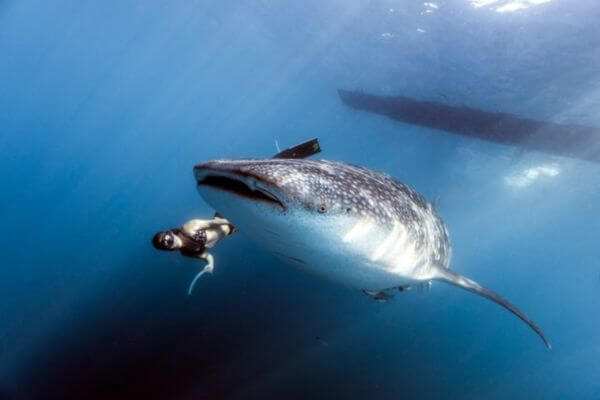
Photo Credit: Emma Li, Pexels
They feed on plankton, which they filter from the water, and they are generally not dangerous to people. They are seen at the surface from time to time, but it is hard to predict when and where.
6. Thresher sharks Threshers are shy sharks that divers mostly see at offshore reefs, such as the Brothers Islands, usually on deeper dives. They have big eyes and a very long whip-like tail. You will not meet them while swimming at the beach.
7. Oceanic Whitetip Sharks This shark has a similar name to the reef whitetip, but it is a different and bigger shark. It lives in open water, usually far from the coast, and it can grow up to 4 meters.
You can recognize it by the long, rounded fins with white tips. Oceanic whitetips are curious and can come close to divers and boats, and they are one of the species that were involved in shark incidents in Egypt.
8. Mako Sharks. Two kinds of makos, the shortfin and the longfin, live in the Red Sea. Both are globally threatened with extinction and are rarely seen near beaches.
Makos are slim, fast sharks with a pointed snout and a blue-grey back. The shortfin mako is widely seen as the fastest shark.
They are not often involved in bites, as the International Shark Attack File lists only a small number of confirmed unprovoked cases and one fatal one for the shortfin mako. In Egypt, officials named a mako in the December 2024 Marsa Alam incident.
Are There Sharks In Egypt?: FAQs
Are there sharks in Egypt?
Yes, sharks live in the Red Sea. Around 49 species have been reliably reported in the wider Red Sea and Gulf of Aden region, but most are rarely seen. You are more likely to encounter reef sharks while diving or snorkelling at reefs.
Are there sharks in Hurghada?
Yes. Sharks live in the Red Sea around Hurghada, and there were serious incidents in 2022 near Sahl Hasheesh and in June 2023. Still, thousands of visitors swim there every year without any problem.
Are there sharks in Sharm El Sheikh?
Yes, there are. The incidents near Sharm El Sheikh happened in 2010 and in 2020, the second one in Ras Mohammed National Park. After an incident, the authorities usually close the affected area.
Which sharks are dangerous in Egypt?
Incidents in Egypt involved tiger, mako, and oceanic whitetip sharks, where the species was identified. For most visitors, these sharks are rarely seen, as they live in deeper or open water.
What should I do if I see a shark?
Stay calm, keep it in sight, avoid sudden movements, slowly move away, and leave the water if you can.
You may want to check: